What to do while you wait for a leak visit
- Shut off the main valve if water is spraying or pooling, and leave it off until the plumber arrives.
- Do not use any appliance that sits in or near standing water.
- Move rugs, boxes and electronics away from wet floors.
- Photograph the stain, the meter reading and the date, since the record helps with any insurance claim.
- Do not cut into a wall or ceiling yourself, because the leak is rarely where the stain appears.
A small amount of preparation keeps a hidden leak from turning into a larger repair.
How we find a leak without demolition
- 1
Confirm with the meter
We isolate the house and check whether the meter moves, which tells us a leak exists.
- 2
Narrow the zone
Shutting off sections of the supply and pressure testing narrows the leak to a section of pipe.
- 3
Pinpoint
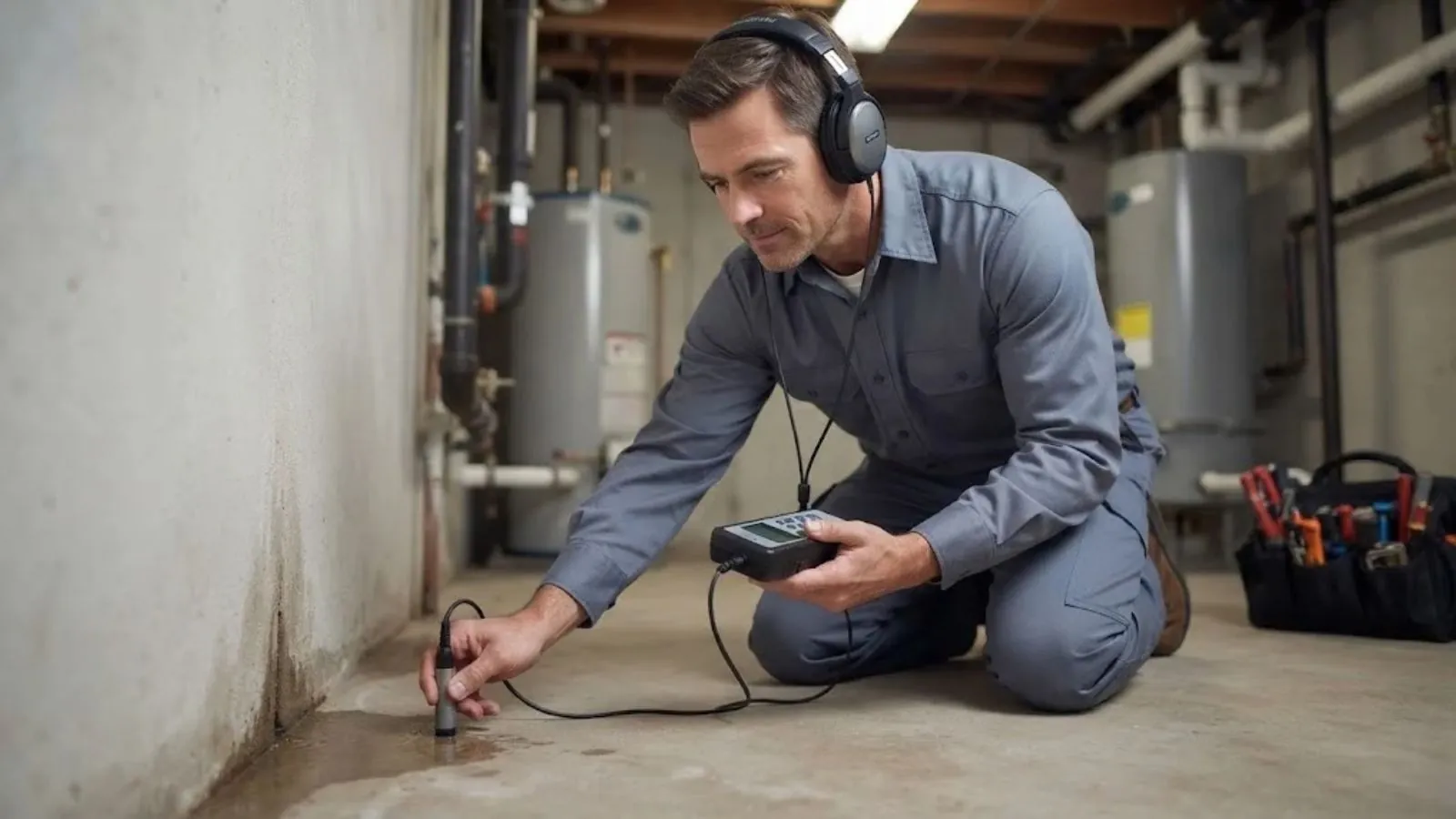
Acoustic listening, thermal imaging and moisture meters locate the spot within a small area.
- 4
Report and plan
You get the location, the likely cause and the repair options before any opening is made.
Water bill climbing?
A meter test can confirm a leak before it ruins a floor.
Where leaks hide
| Location | Typical clue | Notes |
|---|---|---|
| Under a slab | Warm floor spot or sound of running water | Hard to reach, tests carefully |
| Inside a wall | Stain, mold odor or a damp baseboard | Often a joint or fitting |
| Underground service line | Wet yard patch or low pressure | See service line repair |
| Behind a fixture | Soft vanity floor or ceiling stain below | Often a supply or drain connection |
| Irrigation or outdoor spigot | Soggy lawn, constant meter movement | Check hose bibs first |
A leak in a drain line is a different problem from a leak in a supply line. A drain leak shows up with wastewater and may need camera inspection.
High water bills and the meter
A high bill does not always mean a leak. A running toilet is the most common cause, and a flapper that does not seal can waste a surprising amount of water without any noise. Check the toilets first with a few drops of food coloring in the tank.
If the toilets pass and the meter still moves, the leak is in the supply piping or underground. Take a photo of the meter dial before and after a quiet hour. Your water utility can also tell you about the meter and the usage history.
Standards and honest limits
Leak detection tools such as acoustic listening, thermal imaging and pressure testing are methods, not guarantees, and a result is read in context. Any repair that follows is done to New Jersey's plumbing subcode, N.J.A.C. 5:23-3.15, which adopts the National Standard Plumbing Code.
What affects the price of leak detection
- Size of the property. More piping means more zones to test.
- Type of leak. Supply leaks, drain leaks and slab leaks need different tools.
- Access. Finished basements and crawl spaces take time.
- Equipment used. Thermal and acoustic tools are priced differently from a simple pressure test.
- Repair afterward. Detection and repair are separate steps with separate prices.
You get a clear price before work starts. Many homeowners policies cover sudden water damage but not the pipe itself, so ask your carrier. Call (856) 250-1784 for your number.
Older homes and river-valley moisture in Bridgeton
Bridgeton sits on the Cohansey River, and some basements in the city deal with damp conditions that have nothing to do with plumbing. We separate groundwater seepage from a pipe leak by testing the pipes first, since the repair for each is completely different. If the pipes pass, the answer may be drainage, covered under basement waterproofing.
Where a house has mixed pipe materials, the joints between old and new pipe are a common leak point, and we check them early.
Leak Detection questions in Bridgeton, NJ
Yes, for active leaks. If water is flowing and cannot be stopped, call the 24/7 line.
Often yes. Acoustic, thermal and moisture tools locate most leaks within a small area, so any opening is small and in the right place.
Turn off every fixture, read the meter, wait about an hour without using water, and read again. Movement means a leak.
We locate it first and then talk through the repair options: a spot repair, rerouting the line or repiping. See repiping for the larger fix.
Policies vary. Many cover sudden water damage but not the cost of repairing the pipe or gradual leaks. Ask your carrier.
Yes. A meter and pressure test before closing is inexpensive compared with finding a slab leak later.
Need a hidden leak found?
Call any hour in Bridgeton.