Signs your pipes are due
- Repeated pinhole leaks in copper pipe.
- Rust-colored or metallic water, especially after sitting overnight.
- Pressure that has dropped across the whole house.
- Galvanized steel pipe, common in houses built before the 1960s.
- Visible corrosion, green crust or flaking at joints.
One leak is a repair. Several leaks in different places in a few years suggest the pipe is nearing the end.
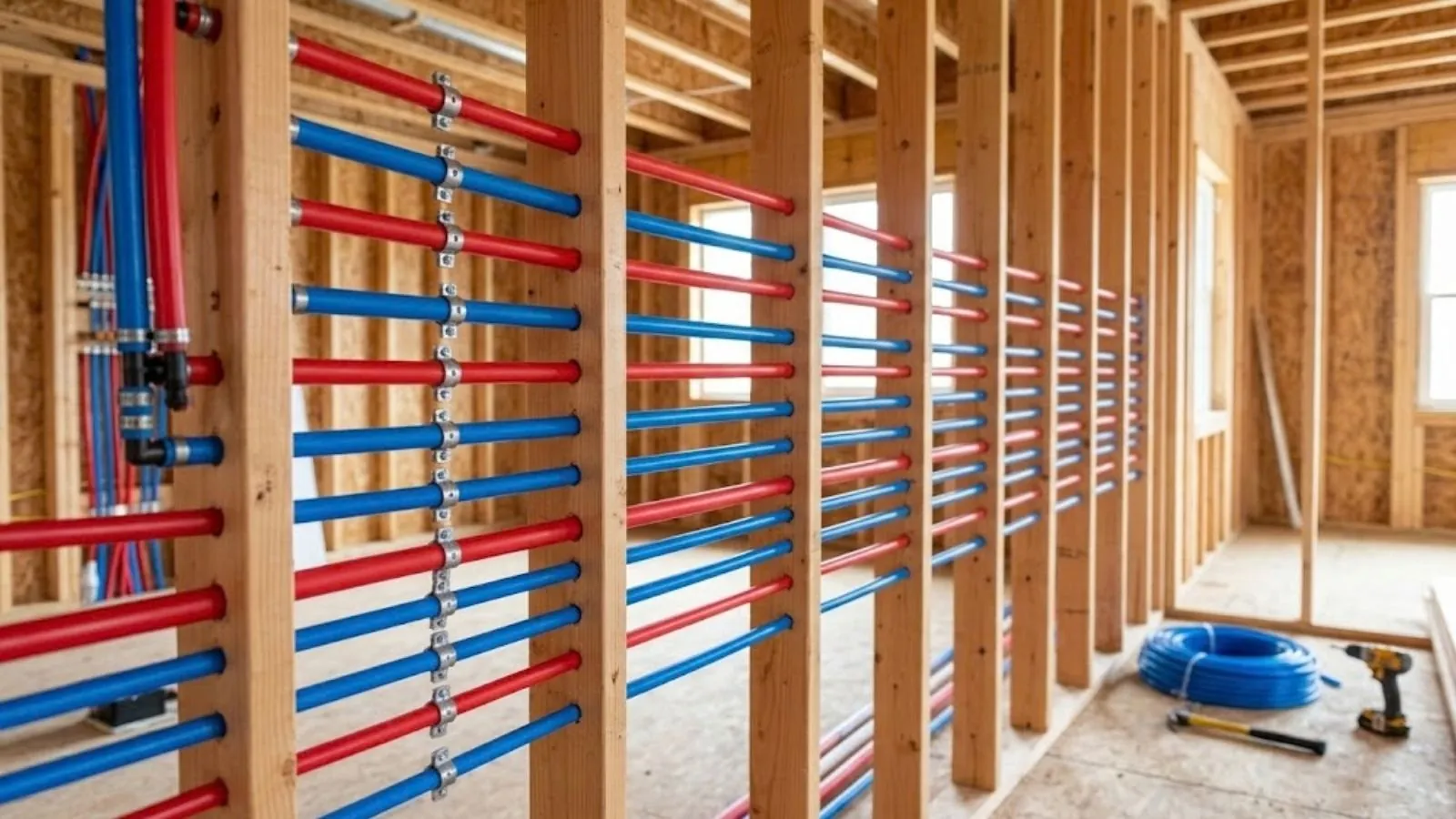
Copper or PEX
| Copper | PEX | |
|---|---|---|
| Lifespan | Long, if the water chemistry is kind to it | Long, with proper installation and no UV exposure |
| Freeze tolerance | Splits when frozen | Expands and often survives |
| Installation | Soldered joints, more labor | Flexible, fewer joints, faster |
| Cost | Higher material and labor | Generally lower |
| Fit | Exposed runs and traditional work | Walls, floors and renovations |
Both are accepted by code, and the right choice depends on your house and budget. We explain both and quote the one that fits.
How a repipe works
- 1
Inspect and plan
We trace the existing supply lines, find access points and choose a route.
- 2
Shut off and open
Water is shut off, and small openings are made where the new line needs to pass.
- 3
Run the new lines
New supply pipe is routed to each fixture and connected to the main and the water heater.
- 4
Test and patch
The system is pressure tested before openings are closed, and patching is coordinated.
Leaks keep coming back?
A repipe inspection tells you whether it is time.
Living in the house during the job
A typical repipe is done in stages so the house stays livable, but water is off for part of each day. Plan for it. Patching drywall and paint is usually a separate trade, and we can tell you what to expect.
A partial repipe, replacing only the worst section, is sometimes the right call. A camera cannot see inside supply pipe, so we judge from the symptoms and the material. If you suspect a hidden leak, start with leak detection.
Before you decide: questions worth asking
- Is the problem the pipe, or the water that runs through it?
- Are there repairs that would buy you years at a smaller price?
- Which materials will the new lines use, and who warrants the work?
- How will the walls be patched, and by whom?
- Does the quote include the permit and inspection?
Two or three quotes on a job this size are normal. Compare scope, not just price.
Lead, galvanized and old solder
Older homes can have lead solder or lead service lines, and galvanized pipe corrodes from the inside. If you are concerned about lead, your water utility can tell you about testing, and a plumber can tell you what material is in your house. A repipe is one way to remove old materials, though not the only one.
What the code says about replacement pipe
The National Standard Plumbing Code, adopted by New Jersey's plumbing subcode (N.J.A.C. 5:23-3.15), lists which materials are approved for water supply and how they must be supported and protected. We choose copper or PEX from that approved list, and pressure test the system before walls are closed.
What affects the price of repiping
- House size. Number of floors, bathrooms and fixtures.
- Pipe material. Copper and PEX differ in cost.
- Access. Finished walls and ceilings add labor.
- Water heater and main connections. Updating shutoffs and the service entry.
- Permit and inspection. Fees and visits where they apply.
You get a clear price before work starts. A repipe is a significant job, and getting more than one quote is reasonable. Call (856) 250-1784 to book an inspection.
Old pipe in the Historic District
Bridgeton's Historic District covers about a quarter of the city and includes over 2,000 properties. We do not assume what supply pipe a house has. Older houses anywhere can have galvanized pipe, lead solder or old patches, and we confirm on site. A repipe in a historic home may also involve preservation concerns, and a homeowner should ask the city whether any review applies.
Permit rules for replacing supply piping fall under New Jersey's Uniform Construction Code, with details varying by municipality. Ask the Bridgeton construction office about your address.
Repiping questions in Bridgeton, NJ
Repeated leaks, discolored water, low pressure and galvanized pipe are the main signs. We inspect and tell you honestly if a partial fix is enough.
It depends on the house. Many take several days, and we give you an estimate after the inspection.
Both meet code and last for decades. PEX is flexible and freeze-tolerant. Copper has a longer track record.
We work from access points and make the smallest openings needed. Drywall patching is typically a separate trade.
Supply pipe replacement is generally permit-regulated in New Jersey. Ask the Bridgeton construction office.
Usually, with the water off for part of each day. We plan around you.
Considering a repipe?
Call for an inspection in Bridgeton.