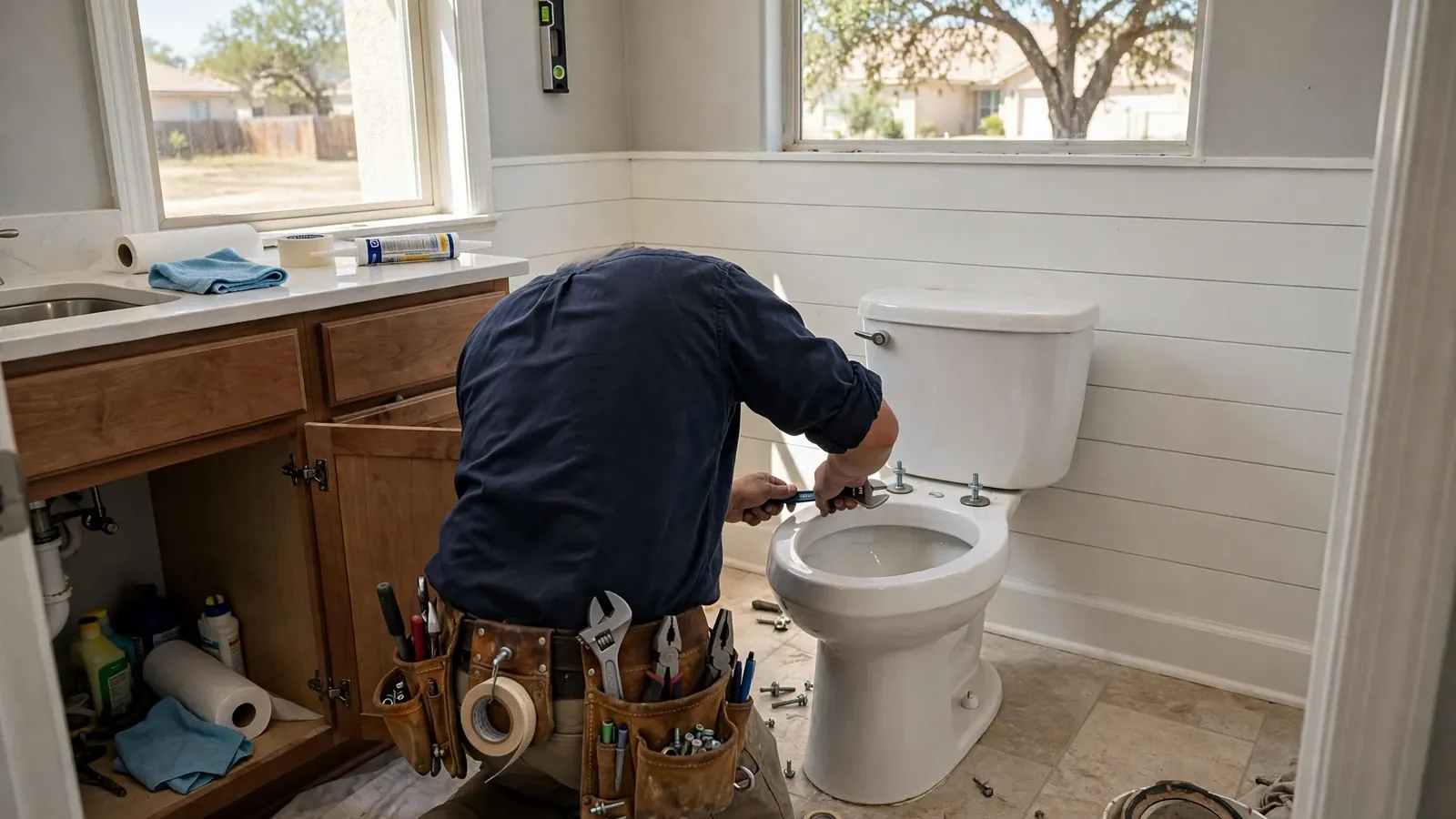
Measure before you buy
| Measure | How | Why |
|---|---|---|
| Rough-in distance | Wall to the center of the closet bolts. Most are 12 inches | A 10 or 14 inch rough-in needs a matching toilet |
| Bowl shape | Round or elongated | Elongated needs about two more inches of room |
| Height | Standard or comfort height | A matter of user comfort |
Look at the flange too. It should sit on top of the finished floor, secured with screws, and not be cracked or corroded.
Tools and materials
- Adjustable wrench, screwdriver and a putty knife.
- A new wax ring or a wax-free seal, and new closet bolts.
- A new supply line, preferably braided stainless.
- A level, shims and a bucket.
- Rags, gloves and a sponge.
Do not reuse an old wax ring. It is cheap, and a compressed one will not seal.
Step by step
- 1
Turn off the water and drain
Close the shutoff valve, flush, and sponge out the remaining water.
- 2
Disconnect and lift out the old toilet
Undo the supply line and bolts, rock the toilet loose and lift it away.
- 3
Clean the flange
Scrape off the old wax and check the flange and floor for damage.
- 4
Set the new bolts and wax ring
Place the closet bolts in the flange slots, and set the new ring in place.
- 5
Lower the toilet
Lower it straight down over the bolts, press firmly and check that it is level.
- 6
Tighten, connect and test
Tighten nuts alternately, attach the supply, open the valve and flush several times, watching the base.
Bridgeton bathrooms: old floors, old flanges
In a tight or remodeled bathroom, floors can be uneven, and flanges may sit below the finished floor, which needs a flange spacer or extender to seal correctly. Federal water-use standards limit flush volume on new toilets, and New Jersey's plumbing subcode (N.J.A.C. 5:23-3.15) governs the installation.
Ask the Bridgeton construction office whether a like-for-like toilet swap needs a permit, since rules vary and moving the toilet to a new location is a different matter. In a rental, ask the landlord before swapping, and keep the receipt. Houses in Vineland and Millville vary just as widely, from century-old homes to new builds, and the flange check matters in all of them.
Common mistakes
The most common mistake is over-tightening the closet nuts, which cracks the porcelain. The second is rocking the toilet after it is set, which breaks the wax seal. The third is skipping the flange inspection and setting a new toilet on a damaged flange, which leaks within months.
A wobbly toilet on a good flange needs shims, not more tightening. Trim them flush after caulking the base if you want a neater finish, though leave a gap at the back so a leak shows itself.
What affects the cost
- The toilet. Price depends on brand and features.
- Flange or floor repair. A broken flange or rotted subfloor adds work.
- Supply line and shutoff. An old valve may need replacing.
- Removal of the old toilet. Hauling it away is part of the job.
- Access. Second floors and tight rooms add labor.
We give you a clear price before work starts. A new toilet is also a good time to ask about plumbing installation if you are remodeling the bathroom. Call (856) 250-1784.
Choosing a toilet that will not clog
Flush performance varies far more than price suggests. Look for independent flush test ratings, a fully glazed trapway and a flush valve of at least two and a half inches. Many modern low-flow toilets work very well, and a few perform poorly.
Check the gallons per flush rating, which for new toilets in the United States is capped by federal rules. A better flush design, not a bigger tank, is what prevents repeat clogs.
Finishing touches
Once the toilet is set and tested, install the seat, cap the bolts and wipe up any excess putty or sealant. Caulk the base only along the sides and front, leaving the back open so a leak is visible. Keep the old toilet out of the house the same day, since it is heavy and awkward to move later.
Write down the date and the seal you used. If the toilet leaks in a year, that note will save time.
When to hand it to a plumber
Call a plumber when the flange is broken, the floor feels soft, the drain is not where the toilet needs it, or the bathroom is part of a remodel. Also call if you find leaking pipes when you lift the toilet. Those are the moments when a straightforward swap becomes a repair.
Questions about this topic in Bridgeton
Measure the rough-in from the wall to the center of the closet bolts. Most are 12 inches.
Yes. Reusing one risks a leak.
Repair the flange first. A damaged one will not hold a seal.
A straightforward swap takes a couple of hours, and flange or floor repairs take longer.
A like-for-like swap is generally maintenance. Ask the construction office about moves or new lines.
Shim it, and do not overtighten the bolts. If it still rocks, check the floor and flange.
Need a toilet installed?
Call to book a visit.